

The Four Seasons
What each season looks like here, what people do with it, and what to have ready before it arrives.
We named the office for them, so it is only fair to tell you what each one is really like. What the weather does, what people do, and what you should have in the shed before it arrives.
Boundary County gets four real seasons, each about three months long. Spring brings runoff and mud, summer brings dry heat and the river, fall brings gold tamarack and hunting season, and winter brings snow. Here is the year as people who live here experience it.
Spring
March to May · Highs 48 to 69 · Lows 30 to 43
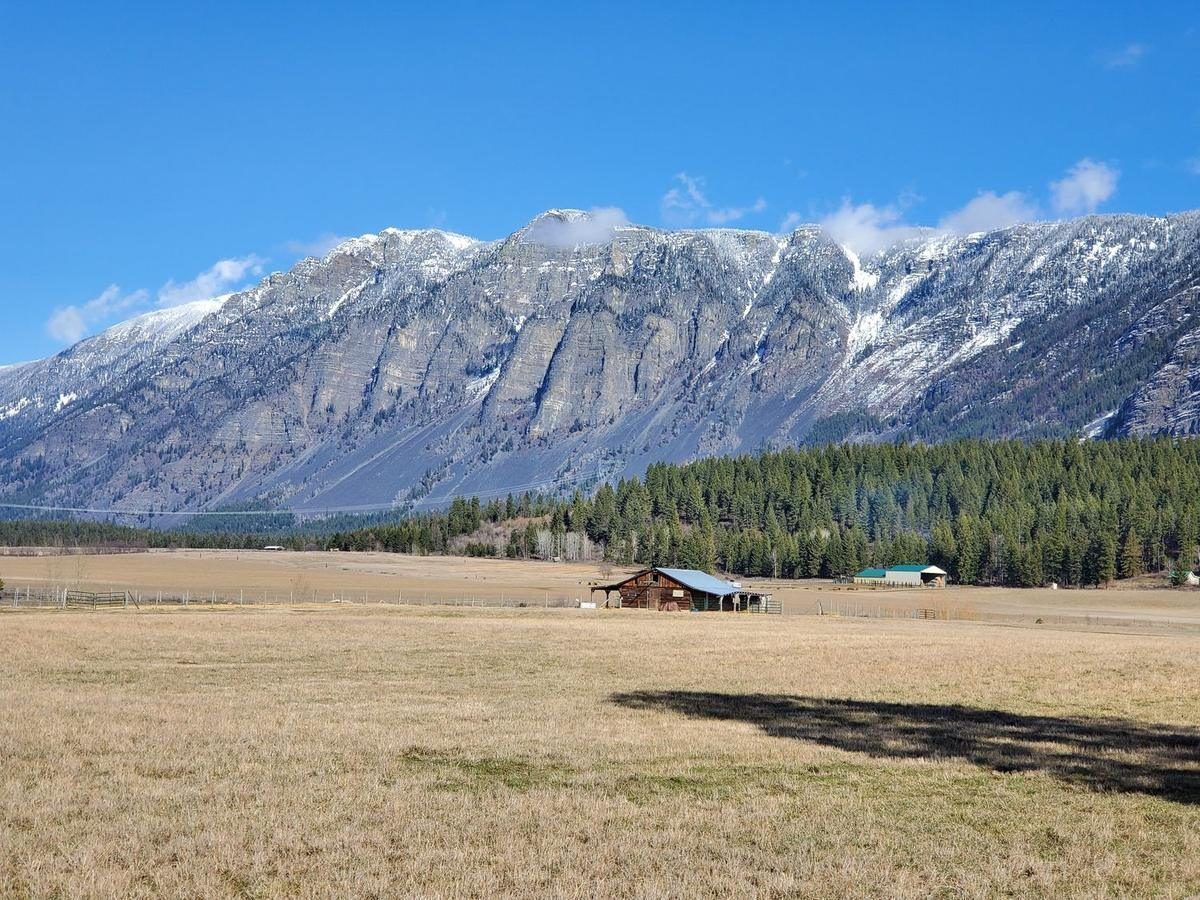
Early March: the valley is bare but the Selkirks are still deep in it. Photo: CENTURY 21 Four Seasons Realty
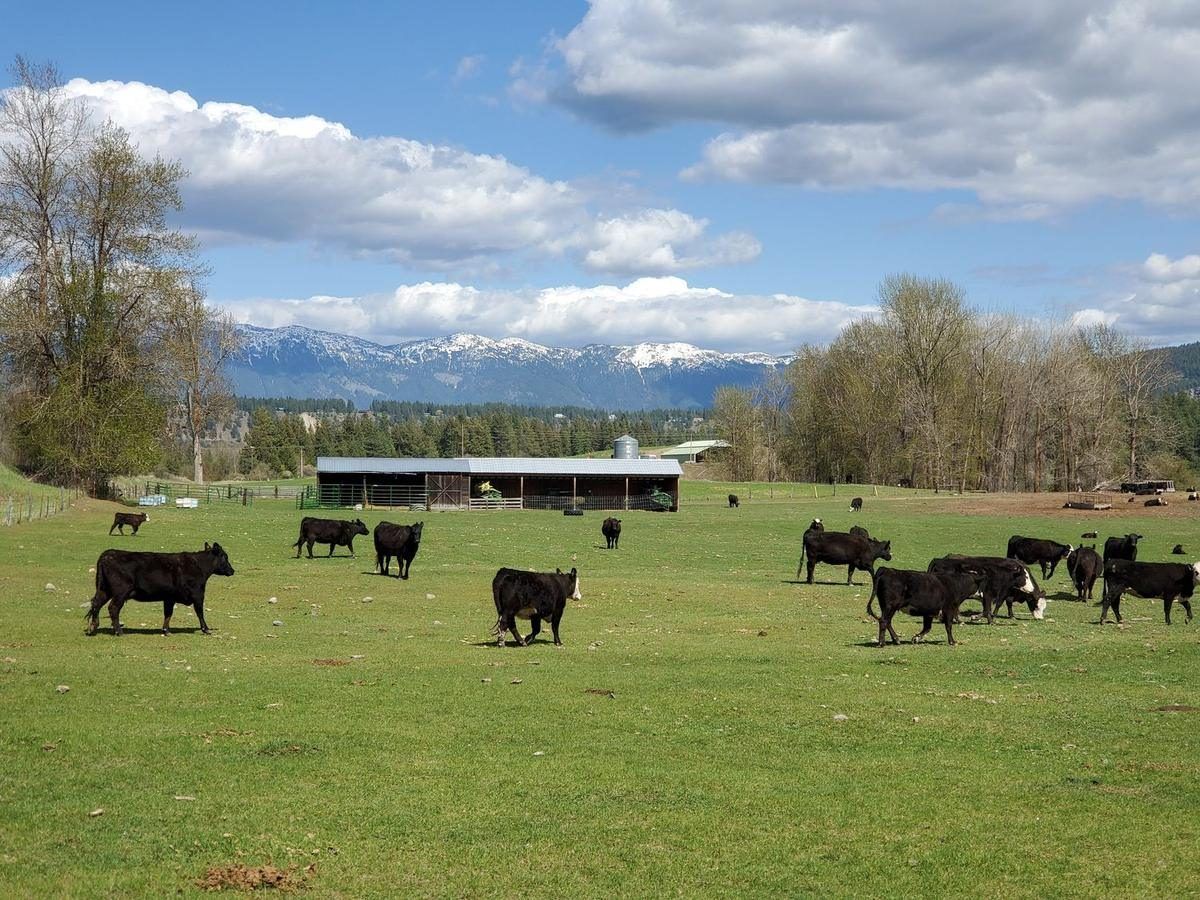
The first of May: green grass in the valley and snow still on the peaks. Spring here happens in layers. Photo: CENTURY 21 Four Seasons Realty
Spring comes to the valley floor in March and to the high country in June. March still averages nearly 4 inches of snow, April dries out, and by May the days reach the high 60s. The last frost in town averages May 6.
What the land does. Runoff fills every creek, and this is the season for the waterfalls: Copper, Myrtle Creek, Snow Creek and Moyie Falls all run hardest from April into June. The Moyie River runs Class II and III whitewater from late May into June. Fields green up, the hop yards are strung, and the refuge fills with migrating waterfowl.
What people do. The Farmers Market opens in May and runs Saturdays through September. The spring Moyie Mudbog runs in May. Spring turkey season opens April 15, and the first river fishing of the year starts as the water clears. Gardens go in after the May frost.
Know before you come. Mud season is real on gravel roads and rural driveways: March and April are the months a long driveway gets soft and a low spot floods. Keep the snow tires on into April. The state closed fire season begins May 10, and from then on any burning outside city limits needs a free permit from burnpermits.idaho.gov.
Summer
June to August · Highs 75 to 85 · Lows 49 to 53
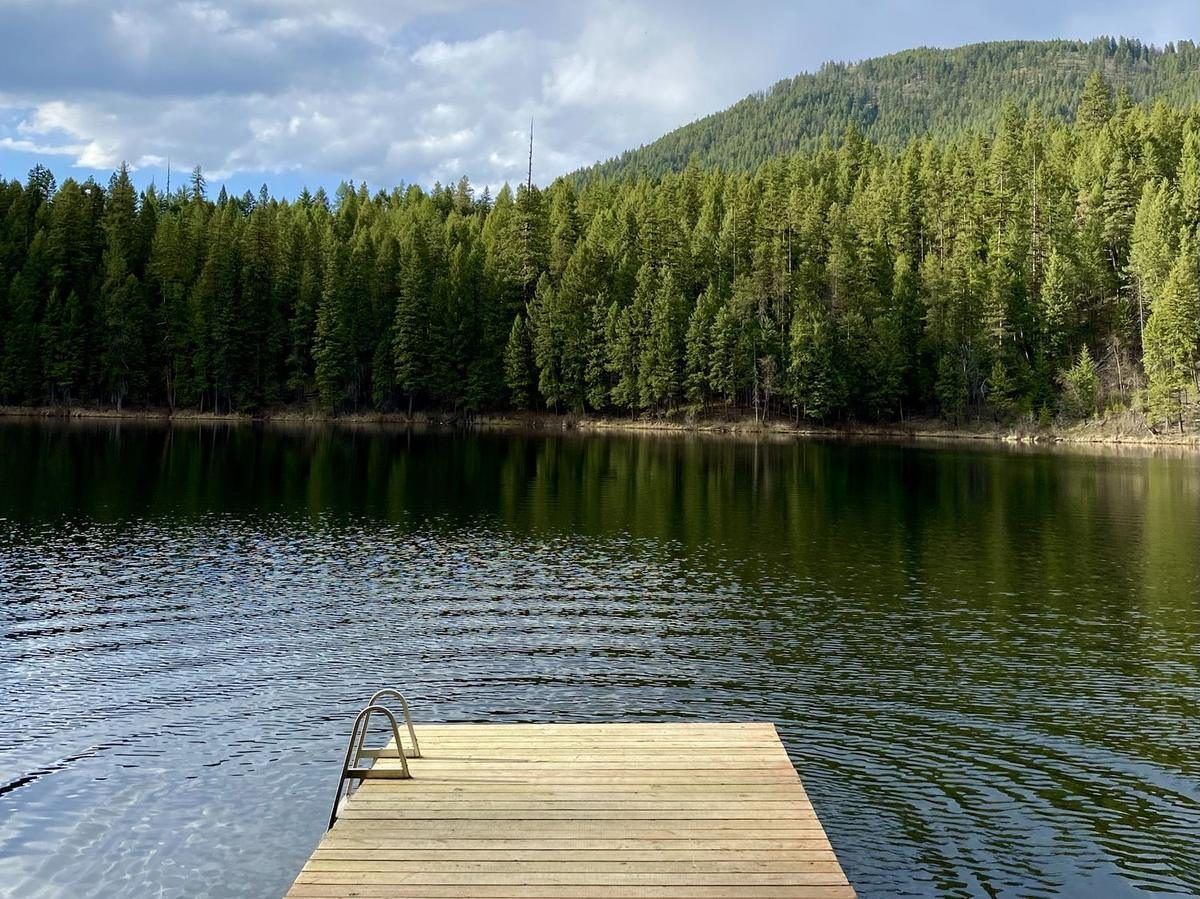
Robinson Lake on a summer afternoon, seven miles south of Eastport. Photo: CENTURY 21 Four Seasons Realty
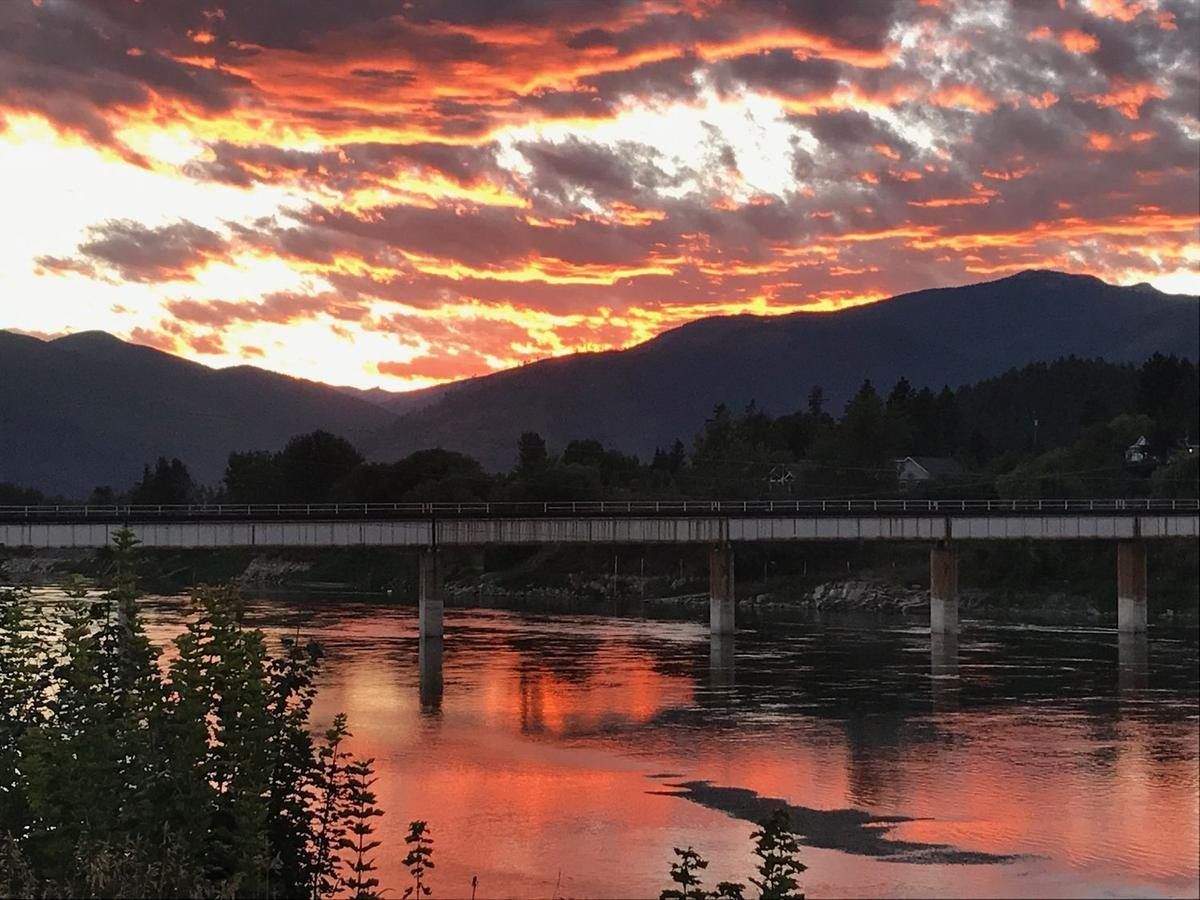
Sunset over the Kootenai at Bonners Ferry. In late June the light lasts until nearly 9. Photo: CENTURY 21 Four Seasons Realty
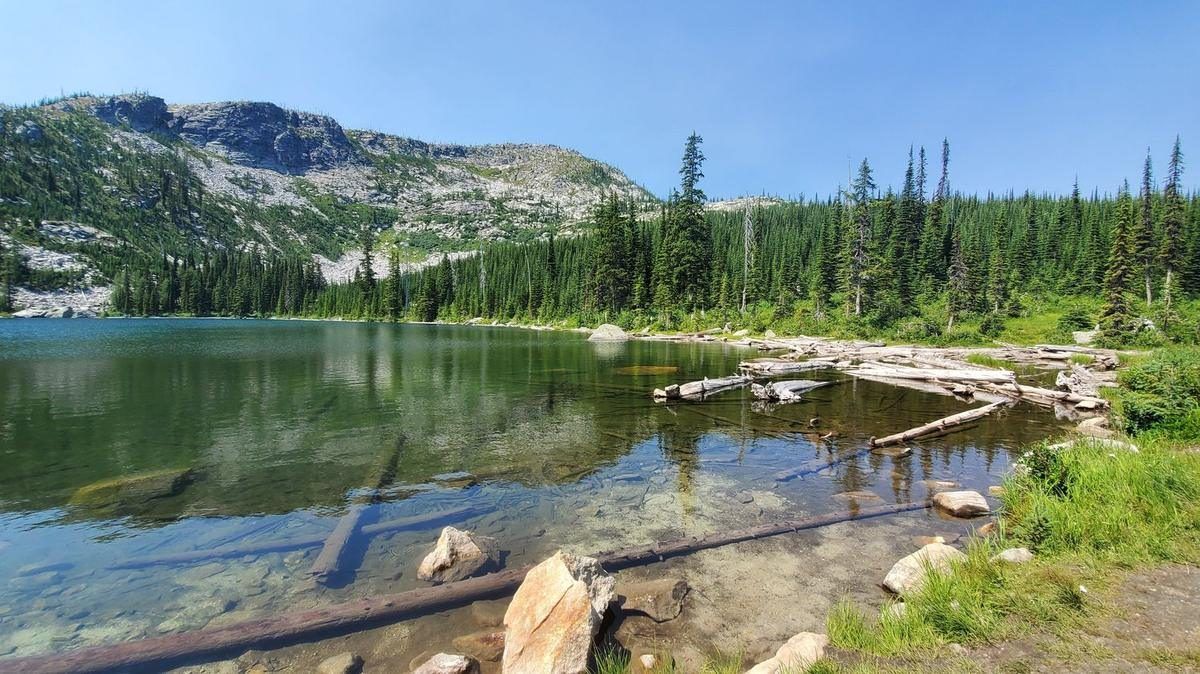
A Selkirk high lake in mid-July, a few weeks after the trail melts out. These are the ones you walk to. Photo: CENTURY 21 Four Seasons Realty
Summers are warm, dry and bright. July and August highs average 85 with nights in the low 50s, and the two months together see barely an inch of rain. Days are long, with light until nearly 9 p.m. in late June.
What the land does. The canola fields turn the valley yellow in June, the first hay cutting comes off, and huckleberries ripen in the national forest from mid-July into August. The Kootenai drops and clears, the lakes warm, and the hop harvest at Elk Mountain Farms runs late summer into early fall.
What people do. This is river and lake season: boating on the Kootenai, swimming at Robinson, Smith and Brush Lakes, paddling at Ball Creek. In town, the Summer Concert Series runs Tuesday evenings at the fairgrounds, the 4th of July parade comes down Main Street, Kootenai River Days falls in mid-July, and the Boundary County Fair, the Tractor Pull and the Swish tournament fill August.
Know before you come. Late summer is dry, so keep defensible space around the house and watch for campfire restrictions in August. Expect the garden to need watering by July. Many homes here have no air conditioning, and hot spells into the 90s do happen.
Fall
September to November · Highs 73 to 42 · Lows 44 to 30
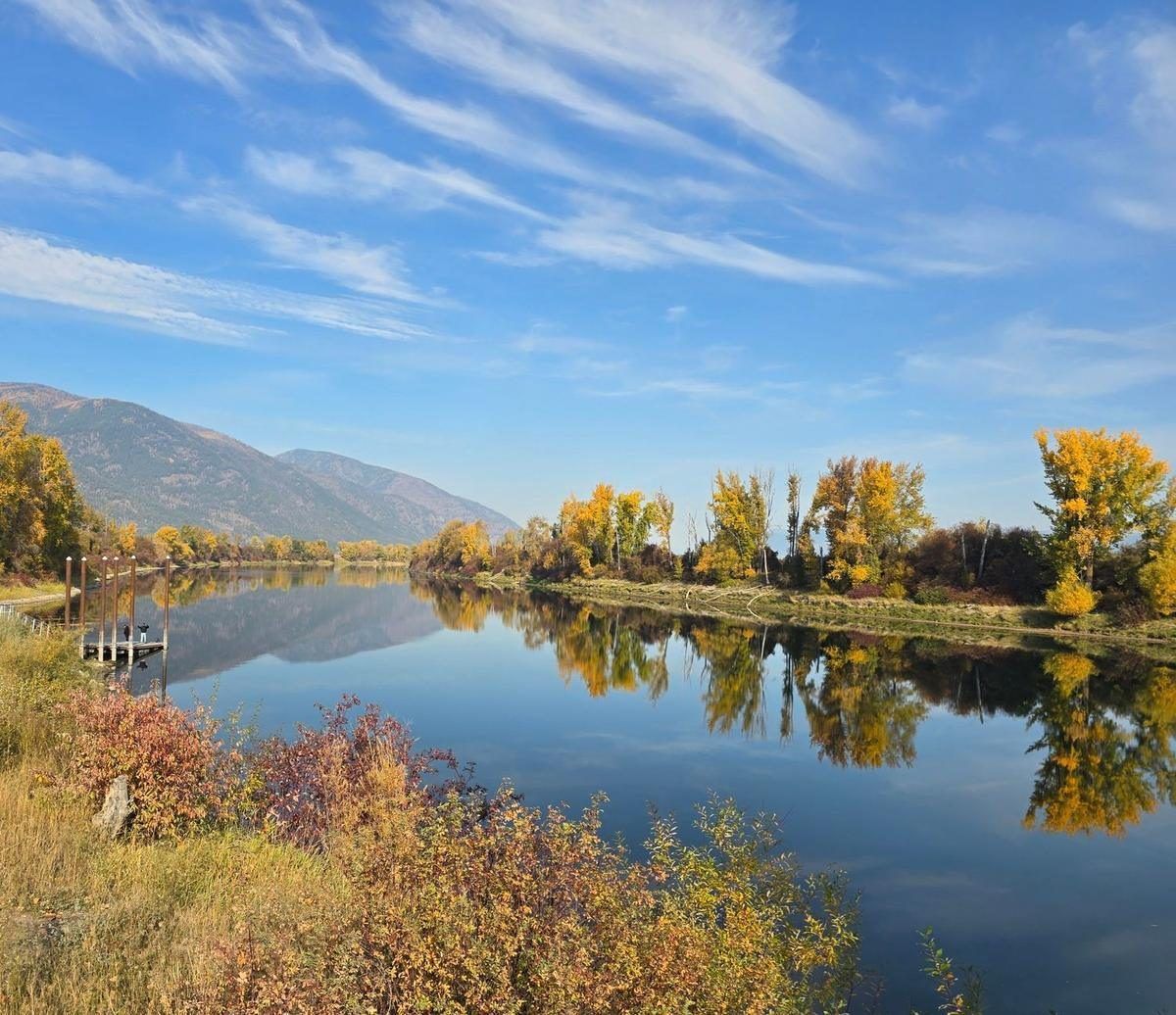
The mouth of Deep Creek on a still October morning, gold cottonwoods along both banks in the three weeks of color everyone talks about. Photo: CENTURY 21 Four Seasons Realty
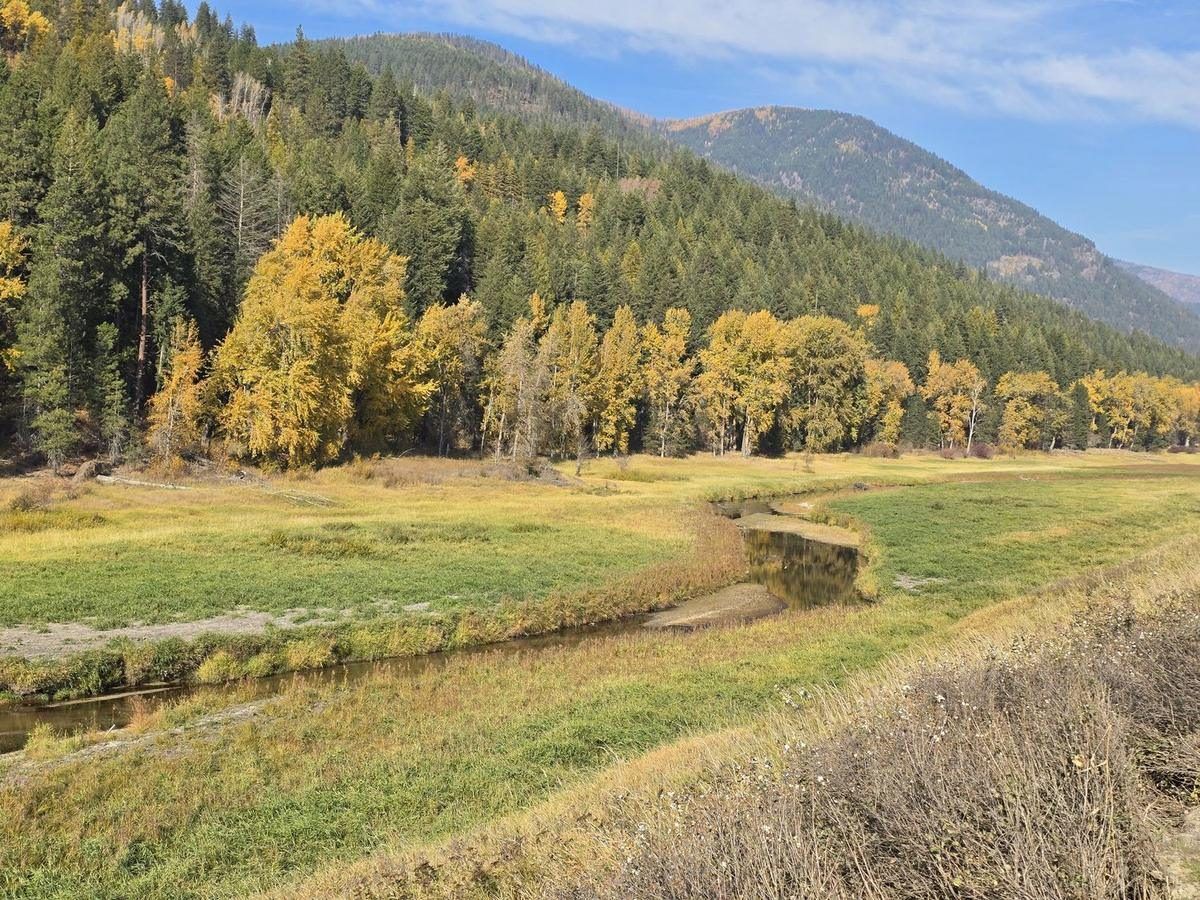
Gold against the timber on the Kootenai National Wildlife Refuge, late October. The aspens and cottonwoods turn first, the tamarack a week or two behind. Photo: CENTURY 21 Four Seasons Realty
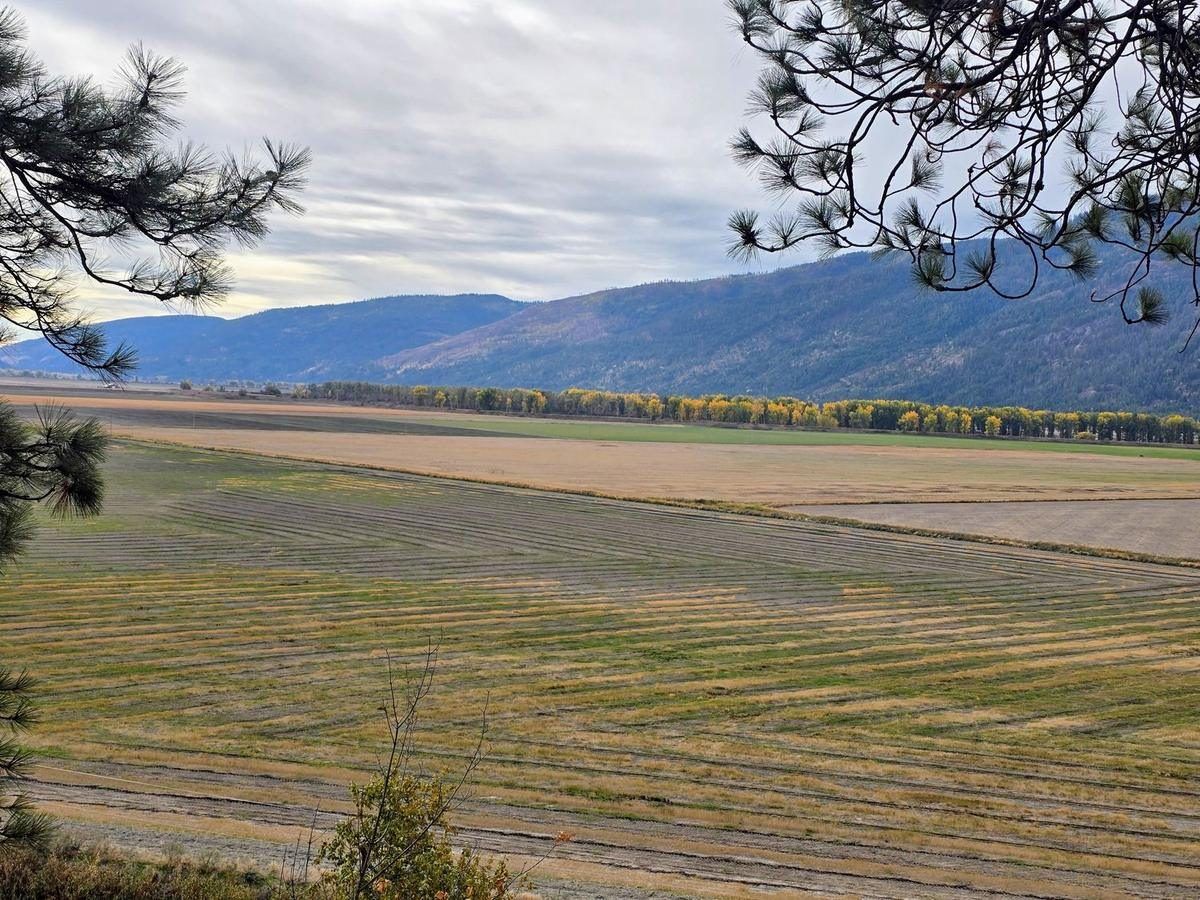
The valley floor in mid-October, fields cut and the last hay in. This is the farm ground west of the river, in one of the valley’s drainage districts. Photo: CENTURY 21 Four Seasons Realty
Fall is short and many people's favorite. September is still warm and dry, October turns the tamarack gold on every hillside, and November brings the first real snow, about 6 inches in town. The first fall frost averages September 27.
What the land does. Grain comes off in late summer and early fall, the hop harvest wraps up, and the tamarack (the western larch, which everyone here calls tamarack) turns the mountains gold for about three weeks in October. It is the one conifer here that drops its needles. Deer move down into the valley fields in the evenings, and the river settles into its clear fall flow.
What people do. Hunting season. The county sits in Game Management Unit 1, and general deer and elk seasons run through October and November, with the exact dates in the Idaho Fish and Game regulations. The North Idaho Truck Show and the Artist Studio Tour come in September, and the fall Moyie Mudbog in October. Everyone with a woodstove is cutting and stacking firewood.
Know before you come. Get the plow, the firewood and the propane fill lined up by October, before everyone else does. Snow tires go on in early November. Rural roads turn from dust to mud to ice in the space of a few weeks, and the first storm is usually the one that catches people.
Winter
December to February · Highs 33 to 39 · Lows 24 to 25
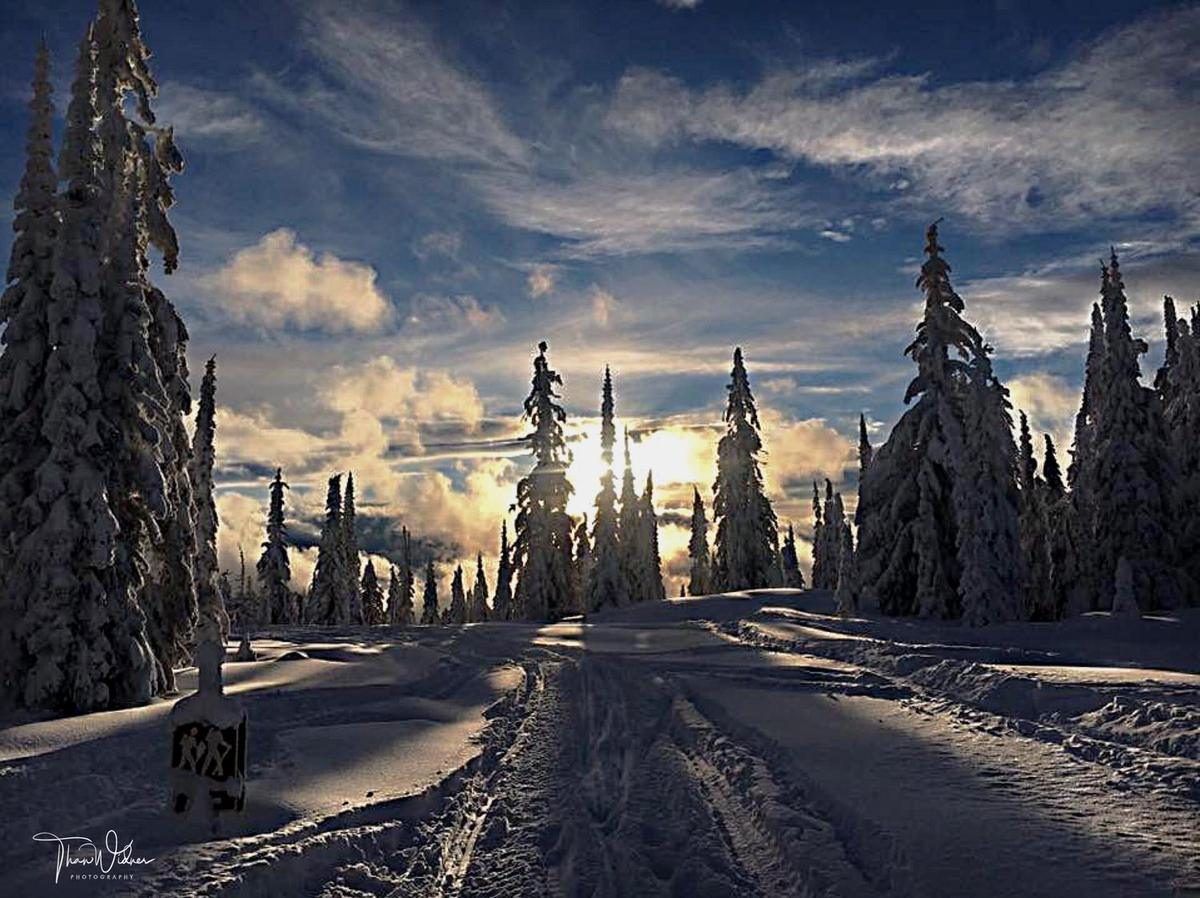
A forest road after a storm, late afternoon. Up high the snow stays like this from December to April. Photo: Than Widner Photography
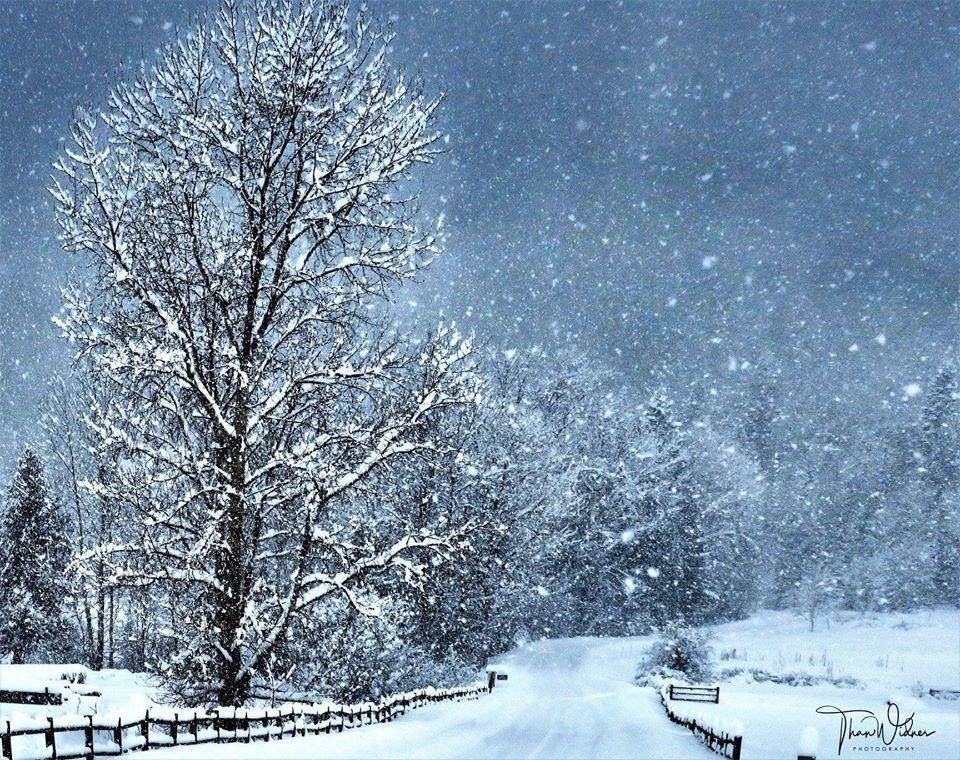
Snowing on a country lane. Most storms here are quiet ones like this, a few inches at a time. Photo: Than Widner Photography
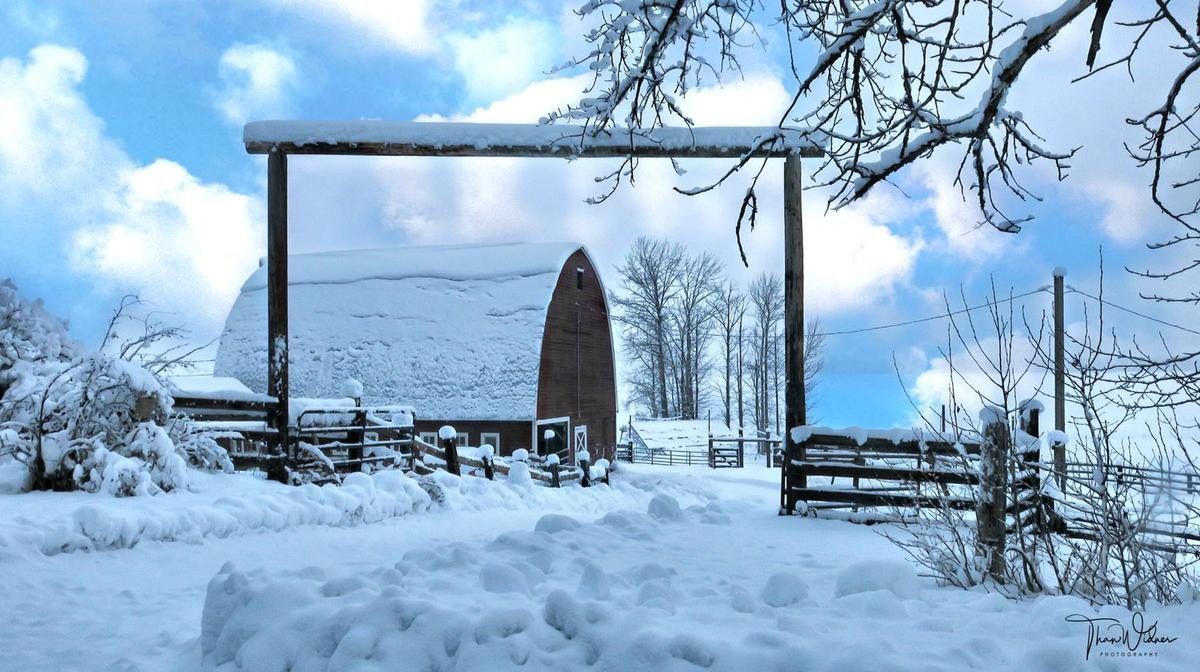
A clear morning after the storm. The barn, the gate and about three feet of snow. Photo: Than Widner Photography
Winter runs from about Thanksgiving through March. Bonners Ferry averages 54 inches of snow a year, the mountains get far more, and January highs sit right around freezing. Downhill skiing is an hour away at Schweitzer, and snowmobiling, cross-country skiing, snowshoeing and ice fishing are all close to home.
Schweitzer & Turner Mountain
Schweitzer Mountain Resort, about an hour away above Sandpoint, is the big one: 2,900 acres, 2,400 feet of vertical, 92 named trails and open bowls, 10 lifts and about 300 inches of snow a year, with views over Lake Pend Oreille. Turner Mountain, 22 miles north of Libby, Montana, is the small one: a volunteer-run hill with one double chair, 22 runs and 2,110 feet of vertical, open Friday through Sunday, with short lines and old-school prices.
Lloyd Hughes Snow Park & the backcountry
The county’s snow park, 3 miles west of Naples, is the main trailhead for the Sandpoint and Bonners Ferry area’s 100-plus miles of marked snowmobile trail. From the park, trails climb from about 2,000 feet to over 7,000, up toward Roman Nose and into the Upper Pack River country on the Selkirk Crest, the high open bowls and ridgelines that riders come here for. Beyond the marked trails, forest roads open up hundreds of miles of riding. Idaho requires an annual snowmobile sticker, about $45 for residents, sold online and at local vendors; the fees fund county trail work. Boundary Backcountry Access is the local club.
Cross-country skiing & snowshoeing
Ball Creek Farm Preserve north of town is open for cross-country skiing all winter, free, from sunrise to sunset. The Kootenai National Wildlife Refuge auto tour route and the closed forest roads above town make quiet snowshoe routes once the snow sets in.
Ice fishing
Smith and Robinson Lakes freeze most winters and hold rainbow and cutthroat trout, kokanee and bass. On the Kootenai, the burbot fishery peaks from January through March. See On the Water for licenses.
More ski hills
49 Degrees North in Washington, Silver Mountain and Lookout Pass in the Silver Valley, Whitewater near Nelson, Whitefish Mountain and Fernie Alpine are all two to three hours away. See Day Trips.
Winter events
The Holiday Market in November, Hometown Holidays downtown, the New Year’s Ball at The Pearl Theater, and the Festival of Hearts in February carry the town through the dark months. The Festival of Hearts is the Fry Healthcare Foundation’s dinner at the Kootenai River Inn, raising money for Boundary Community Hospital.
Living with winter
Roads. The Idaho Transportation Department plows Highways 95, 2 and 1, and Boundary County Road & Bridge plows county roads, with the main routes first. A private road or a long driveway is the owner's job, so budget for a plow, a tractor with a blade, or a neighbor with one. Check 511.idaho.gov or dial 511 for road conditions from November through April.
Tires. Studded tires are legal in Idaho from October 1 through April 30. Most people here run studs or a good winter tire and keep chains in the truck for the hills.
Home. Snow load is part of building here, so roofs are built for it, but every home needs a plan for the driveway, the woodpile or propane tank, and a backup for the power. Outages in a wind or ice storm are not rare in the rural county, and a generator is common. Keep the septic lid and the well house findable under the snow.
Daylight. The shortest days run about eight and a half hours in late December, and the valley can sit under low cloud for stretches. Most people who love it here love winter too; if you are not sure, visit in January before you buy.
Sources: Schweitzer; Turner Mountain; Idaho Parks and Recreation county snowmobile programs; Idaho snowmobile registration; Idaho Transportation Department, studded tires; Bonners Ferry Living Local, winter events; NOAA climate normals.