

Buying Rural Property
Room to roam is why many people come here. Out in the county, a few things work differently than in town, and knowing them before you write an offer saves time and surprises.
The first thing most buyers ask us about rural ground is the well. The second is the driveway in February. Both are good questions, and neither one shows up in the listing photos. This chapter is the list we run through before we write an offer on acreage.
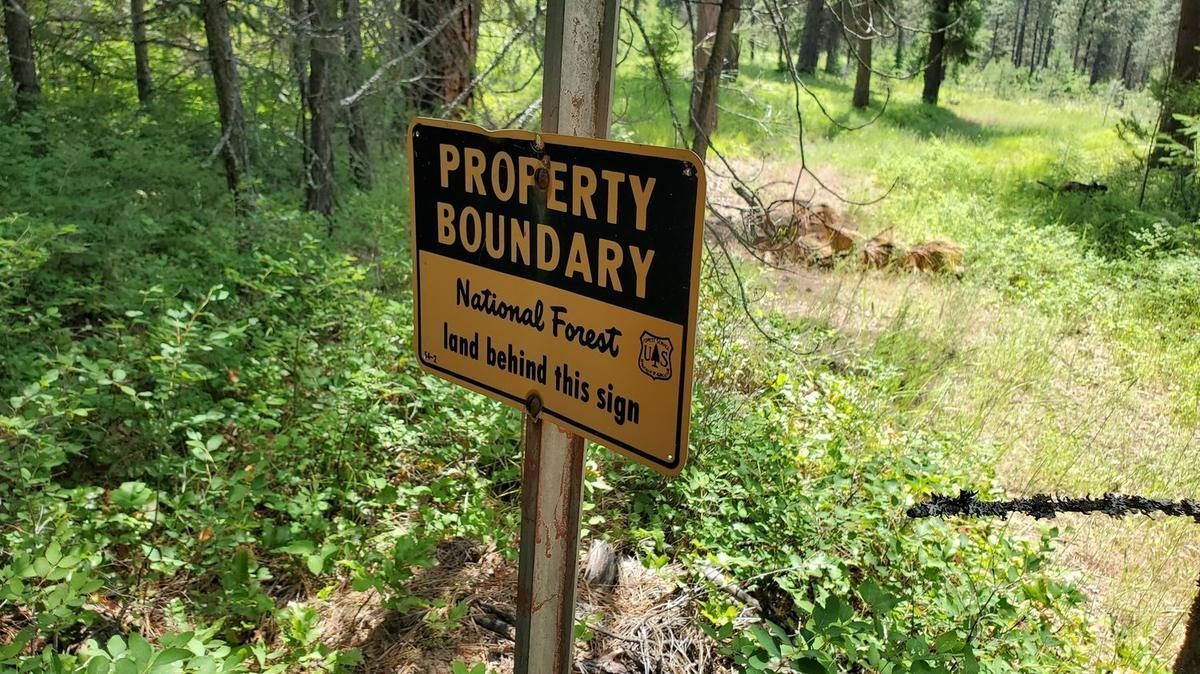
This sign is the best neighbor you can have. National Forest on the other side means nobody builds there. But who maintains the road? Photo: CENTURY 21 Four Seasons Realty
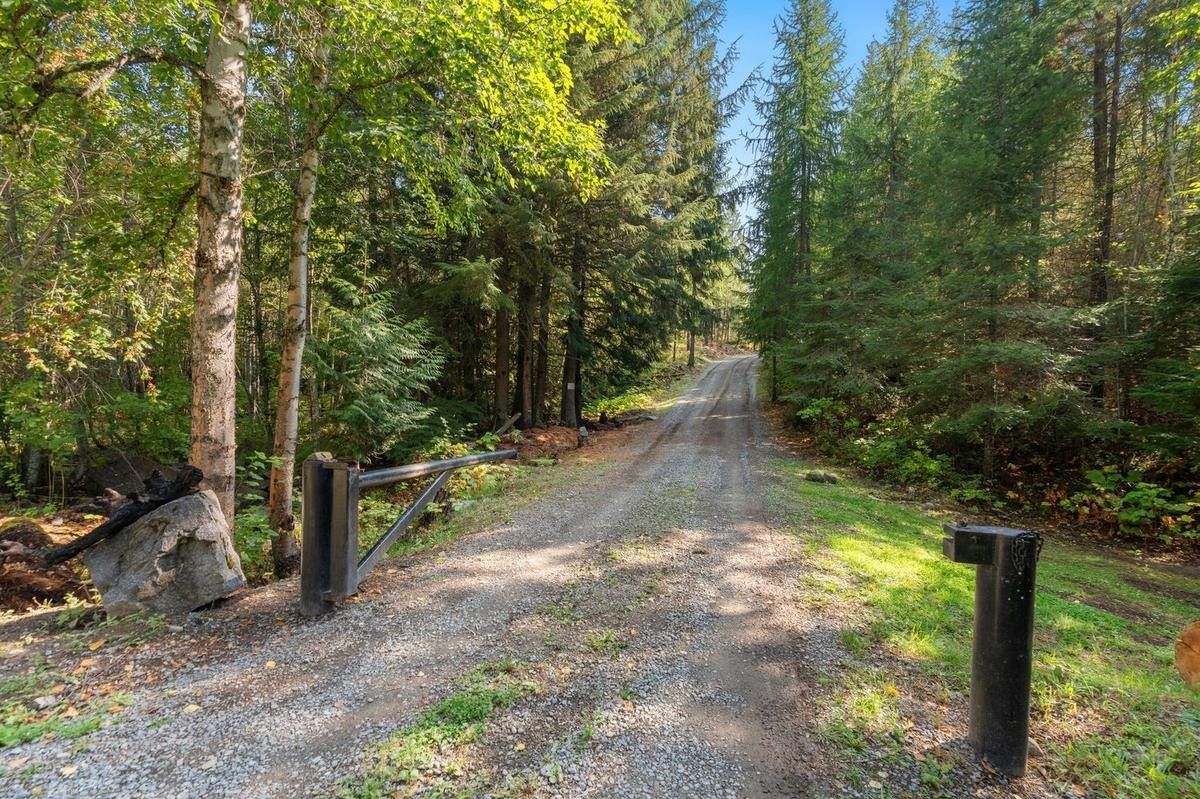
A typical county driveway: gravel, a gate, and a quarter mile of timber. Photo: CENTURY 21 Four Seasons Realty
Most of Boundary County is unincorporated, and a lot of what makes a rural parcel work (water, septic, legal access, fire coverage and internet) is up to you to confirm rather than handed over with the keys. None of it is hard, but the order matters. Here's the short version of what we walk our buyers through.
Know What You Can Build
Outside the Bonners Ferry and Moyie Springs city limits, Boundary County Planning & Zoning handles land use. Before you build a home or an accessory dwelling, the county issues a Residential Placement Permit, which checks setbacks, minimum parcel size, the driveway approach, and any flood, wetland or airport overlay. Minimum parcel size is 5 acres in Rural Residential zones and 10 acres in the agricultural and ag/forestry zones, with smaller minimums in suburban and residential areas with services. Splitting land takes a county permit too, though new unplatted parcels of 20 acres or more are exempt. Inside Bonners Ferry, the city requires building permits, and the state (Idaho Division of Occupational and Professional Licenses, or DOPL) issues plumbing, electrical and mechanical permits everywhere.
Roads, Approaches & Easements
Any new or changed driveway onto a county road needs an approach permit from Road & Bridge; approaches onto a state highway go through the Idaho Transportation Department. The county is clear that an approach permit does not prove a parcel has legal access, so confirm recorded easements and who maintains a private road before you buy. The county looks after more than 355 miles of road and plows by priority. The berm at the end of your driveway is yours to clear, and pushing snow across a county road is against state law. Expect spring load limits on some roads while the frost comes out.
Wells & Water Rights
A new well needs a drilling permit from the Idaho Department of Water Resources and a licensed driller. Idaho's domestic exemption covers up to 13,000 gallons a day for a home, livestock and up to half an acre of irrigation, with no separate water right needed. If a property comes with water rights for a creek, spring or irrigation, they usually transfer with the land, and the new owner has 120 days to file a change-of-ownership notice. On an existing home, ask for the well log and consider a flow and water-quality test.
Septic & Soils
Panhandle Health District evaluates soils and issues septic permits from its Bonners Ferry office on Caribou Street. On bare land, a preliminary soil analysis with test holes before closing can tell you whether a standard system will work. It isn't a permit, but it answers the big question early.
The Valley Floor
Much of the Kootenai valley bottom is mapped floodplain. Building there takes a county Floodplain Development Permit, and structures in a FEMA flood zone need an elevation certificate from a licensed engineer or surveyor. Check the flood map for any valley parcel early; it affects placement, design and insurance.
Fire Protection
Rural fire service comes from local departments and districts: Bonners Ferry, Curley Creek, Hall Mountain, Moyie Springs, North Bench, Paradise Valley and South Boundary in Naples. Confirm which one covers a property, since the placement permit asks. From May 10 to October 20, burning outside city limits needs a free Idaho Department of Lands burn permit, and Idaho Firewise has good guidance on defensible space around a home in the trees.
Open Range & Farm Country
Idaho is an open-range state: outside cities and herd districts, it's generally up to landowners to fence livestock out. Idaho's Right to Farm Act protects established farms from nuisance claims when new neighbors move in, so expect the sights, sounds and hours of working agriculture. Land actively farmed or managed as forest can qualify for special property tax treatment, and harvesting timber requires notifying the Idaho Department of Lands.
Connectivity by Address
Service varies from one road to the next. Look up the exact address on the FCC National Broadband Map, then ask the providers and the neighbors. Where fiber and fixed wireless don't reach, satellite service fills the gap.
Who to Call
Boundary County Planning & Zoning
Placement permits, zoning & land divisions · (208) 267-7212
Idaho Dept. of Water Resources
Northern Regional Office, Coeur d'Alene · (208) 762-2800
This is a general overview, not legal advice, and rules change. Always confirm the specifics for a parcel with the agency involved. We're happy to help you sort out who to ask.